
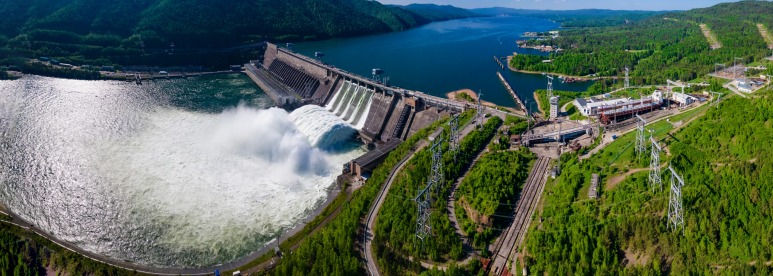
Hydroelectric power plants combine extensive infrastructure, sensitive electrical equipment and exposed elements that require a lightning protection strategy tailored to each area. Discover how to protect them through a comprehensive approach.
Hydroelectric power plants play a key role in renewable energy generation. However, their characteristics require particularly careful lightning protection. Their location, the presence of outdoor structures, substations, power lines and control equipment, together with the need to ensure service continuity, mean that a thunderstorm can pose a risk to both personnel and the infrastructure itself. For this reason, lightning protection should be approached as an integrated solution, combining different protection measures according to the specific characteristics of each area.
DIFFERENT PROTECTION REQUIREMENTS
A hydroelectric power plant comprises areas with very different characteristics. The powerhouse, the outdoor substation, electrical systems, communication systems and outdoor working areas are not exposed to the same level of lightning risk and do not necessarily require the same protection solution.
The IEC 62305 standard approaches lightning protection from a comprehensive perspective, covering risk assessment, the protection of structures and people, and the protection of internal electrical and electronic systems. However, protection requirements do not depend solely on the different areas within a power plant. The type of hydroelectric facility also determines its layout, dimensions, level of exposure and the distribution of critical assets.
There are different types of hydroelectric power plants depending on factors such as water resource availability, the required generation capacity and geographical conditions. Run-of-river, reservoir, pumped-storage and diversion hydroelectric power plants each have different configurations that must be considered when designing an effective lightning protection strategy.
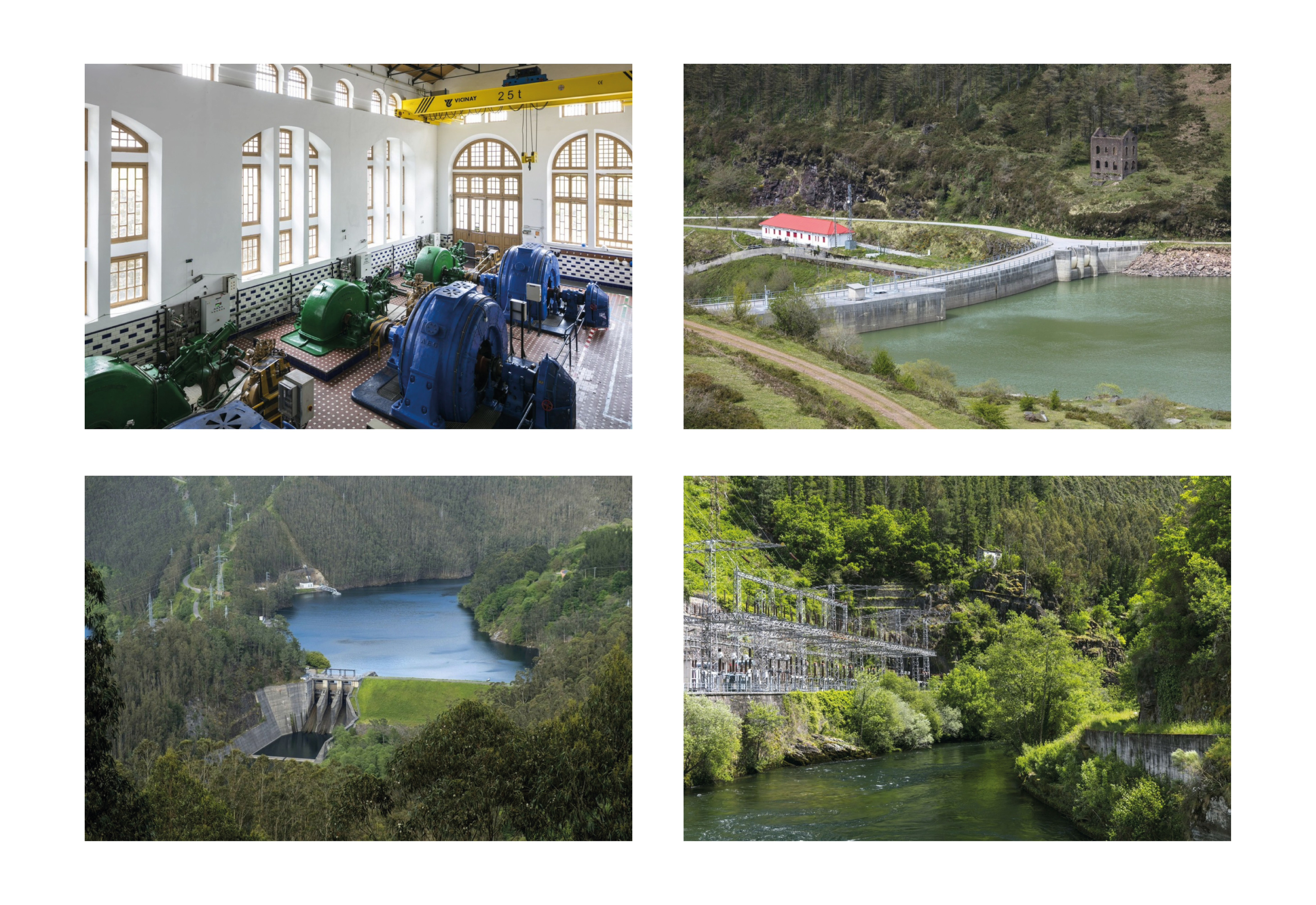
The characteristics and configuration of each type of hydroelectric power plant influence the assessment of its lightning protection requirements.
For this reason, the design process should begin with an analysis of the installation, its environment and the applicable standards, identifying critical assets and determining the most appropriate protection measures. In infrastructures of this nature, not every area should be protected in the same way or with a single technology. Instead, the protection strategy should be tailored to the specific requirements of each area while maintaining a coordinated, integrated approach. This is where combining different lightning protection technologies becomes especially important.
BUILDING PROTECTION USING AN ESE LIGHTNING PROTECTION SYSTEM
The external protection of the power plant buildings can be achieved using an Early Streamer Emission (ESE) lightning protection system, always in accordance with the standards applicable to the project. The objective is to provide a system capable of intercepting the lightning strike and safely conducting the lightning current to ground through a defined and properly dimensioned path.
However, the air terminal is only one component of the overall system. Effective external lightning protection requires the correct integration of the air-termination system, down conductors and grounding system, together with the assessment of separation distances and the necessary equipotential bonding.
The building geometry, its height, rooftop installations and the required protection level will determine the design and positioning of the ESE lightning rod in order to achieve the required protection zone. This solution provides effective protection for the main building, adapted to its specific geometry. However, the protection approach changes when addressing one of the most critical areas of a hydroelectric power plant: the electrical substation.
CONVENTIONAL LIGHTNING PROTECTION FOR THE SUBSTATION
An electrical substation has a completely different configuration from that of a building. Transformers, busbars, insulators and other high-voltage equipment are distributed across an open area where the exposure of each component to a potential direct lightning strike must be carefully assessed.
In this case, protection can be achieved using a conventional air-termination system, based on Franklin rods, masts and/or overhead shield wires to create the required protection zones over the substation equipment.
The objective is not simply to install air terminals arbitrarily, but to determine, using appropriate design methods, which equipment is effectively protected against direct lightning strikes. In fact, IEEE 998-2026 is specifically dedicated to the design of direct lightning shielding for substations and includes both classical design methods and the Electrogeometric Model (EGM) for defining the protection system.
Grounding also plays a fundamental role in this environment. The lightning current must be safely dissipated into the ground, and the design must ensure proper equipotential bonding while minimizing hazardous potential differences.
PROTECTING PEOPLE THROUGH EARLY WARNING
There is another risk that infrastructure protection systems alone cannot address: the exposure of personnel during a thunderstorm. Hydroelectric power plants often require inspection, maintenance and operational activities in outdoor and exposed areas. In these situations, knowing that the installation is protected against direct lightning strikes does not necessarily mean it is safe to continue working outdoors during a storm. For this reason, infrastructure protection can be complemented with an early warning solution such as the PREVISTORM® Thunderstorm Warning System.
PREVISTORM® is designed in accordance with IEC 62793:2020 and continuously monitors cloud electrification processes using an electric field sensor. It generates early warnings that indicate the risk of lightning before the first strike occurs. The system also identifies when the risk has subsided, providing valuable information to determine when safety protocols should be activated and when normal operations can safely resume.
In a hydroelectric power plant, this capability enables preventive safety procedures for personnel working outdoors, such as suspending specific operations, evacuating exposed areas and moving workers to safe locations before the lightning risk reaches critical levels. In this way, the protection strategy evolves from protecting infrastructure against lightning strikes to preventing risks associated with thunderstorms.
A COMPREHENSIVE STRATEGY FOR PROTECTING HYDROELECTRIC POWER GENERATION
Lightning protection for a hydroelectric power plant should not be viewed as a choice between an ESE lightning protection system and a conventional lightning protection system. The most effective approach is to combine different protection measures wherever they provide the greatest benefit.
An ESE system can protect the plant buildings, while a conventional air-termination system using Franklin rods, masts and shield wires can provide the required shielding for the electrical substation. Surge Protective Devices (SPDs), equipotential bonding and grounding systems help protect electrical and electronic equipment, while an early warning solution such as PREVISTORM® enhances personnel safety by providing advance warning for workers operating in exposed areas.
At INGESCO, every project begins with a detailed analysis of the installation, its environment and the applicable standards, enabling us to design a solution tailored to the specific requirements of each infrastructure. Because in a facility dedicated to energy generation, protecting against lightning also means protecting people, preserving critical assets and ensuring operational continuity.